


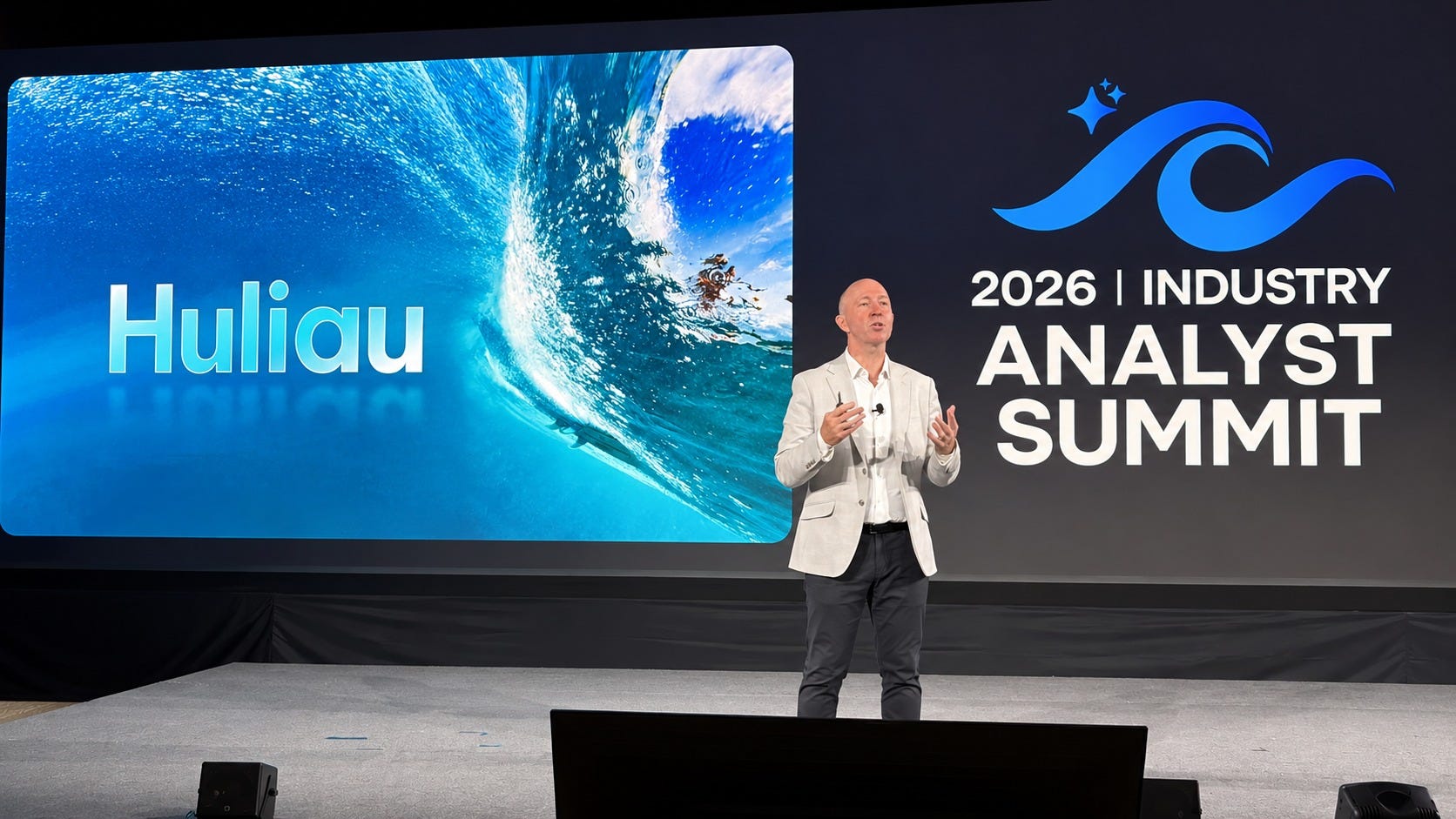
At NiCE’s Industry Analyst Summit, CEO Scott Russell set the tone with a Hawaiian word: Huliau, meaning a turning point or moment of profound change. The word reflected the location, but, more importantly, captured the inflection point at which the CX industry finds itself.
As Scott put it: “Brands no longer own the customer journey. The customer’s AI agent does.” Personal agents were a key theme in Chief AI Officer Phil Heltewig’s presentation. Their growing capabilities and accelerating adoption are fundamentally changing how consumers interact with brands.
At NiCE World, Phil had already warned us about the impending explosion of AI assistants reaching out to brands and interacting on consumers’ behalf. The recent launch of Muse shows this is no longer a distant possibility but a rapidly emerging reality, bringing two major challenges for brands.
First, the volume challenge. As consumers increasingly delegate interactions to their personal agents, brands could face a massive surge in interaction volumes. Meeting this demand will require brands to accelerate the deployment of their own AI agents and ensure they can interact effectively with consumers’ personal agents. This is why NiCE joined Meta’s consortium for the Personal Agent Protocol earlier this month, reaffirming its commitment to staying at the forefront of this important trend.
Second, the disintermediation challenge. As personal agents take over a growing share of customer interactions, brands risk losing direct access to consumers. Brands will need to become more proactive. This will, in particular, entail identifying critical moments and seizing them to engage customers through human interactions when they can make the greatest difference.
This makes effective collaboration between AI and human agents even more critical. Brands will need to combine the scalability of AI with the ability to bring humans into interactions when they can make the greatest difference. NiCE’s ambition is to eliminate the friction of traditional handoffs by bringing AI and human agents together as collaborators rather than treating them as separate resources. Its new Agent Workspace embodies this vision, bringing AI directly into the flow of conversations and enabling human agents to assist AI behind the scenes or join the interaction to create a three-way conversation between AI, humans, and customers. Similarly, NiCE monitoring, QM and workforce planning now span both human and AI agents.
President of CX Product & Technology Jeff Comstock put NiCE’s trajectory over the last 12 months into perspective. The Cognigy acquisition last summer put the company at the forefront of the agentic revolution. Cognigy now sits at the core of the NiCE platform while remaining a best-of-breed Conversational AI solution. One platform, two adoption paths.
The product demos helped me connect the dots between several innovations that are shaping NiCE’s path forward and redefining what a CX platform can be. I want to highlight two.
Agentic Analytics builds on the NiCE data platform, bringing together data across CX operations. It has evolved into a signal engine that continuously analyzes interactions, workflows, and outcomes to identify patterns and surface recommendations across the CX value chain, from automation opportunities and knowledge gaps to broken handoffs, journey optimization, and churn prevention. At the summit, analysts had the opportunity to build their own AI agents. Agentic Analytics streamlined the starting point and assisted us throughout the process.
Agentic Engagement Plane (AEP), unveiled at NiCE World, is a vendor-agnostic orchestration layer connecting channels with human and AI agents. It works with NiCE Cognigy and third-party AI agents, as well as human agents using NiCE CXone or other vendors’ contact centers. It coordinates interaction resolution based on intent and rules, leveraging Shared Cases and Experience Memory to maintain context and continuity across interactions.
Scott left us with a key takeaway: as AI becomes pervasive, accountability will be the next frontier. The challenge is no longer just building capable AI agents, but ensuring their actions remain governed, measurable, and traceable.