


At its What’s Next with AWS event, the cloud hyperscaler made several announcements, including a particularly ambitious one: the expansion of Amazon Connect into a family of agentic business solutions, which I want to unpack.
You knew Amazon Connect as contact center software. Reset that view: it now represents a family of agentic solutions that package AWS cloud services into ready-to-use offerings.
This announcement carries real strategic weight. A few years ago, a rumor circulated that a team inside AWS was making the case for acquiring HubSpot, sparking debate about the company’s developer DNA and its ability to move up the stack into business applications.
Today, AWS is providing a clear answer to that question. It is not only building business applications, but also using agentic AI to deliver a new class of solutions.
The infrastructure giant has built a $1B business with Amazon Connect, its CCaaS solution. Using Connect as the umbrella brand for its solution portfolio signals a clear intent: replicate the same playbook that drove Amazon Connect’s success.
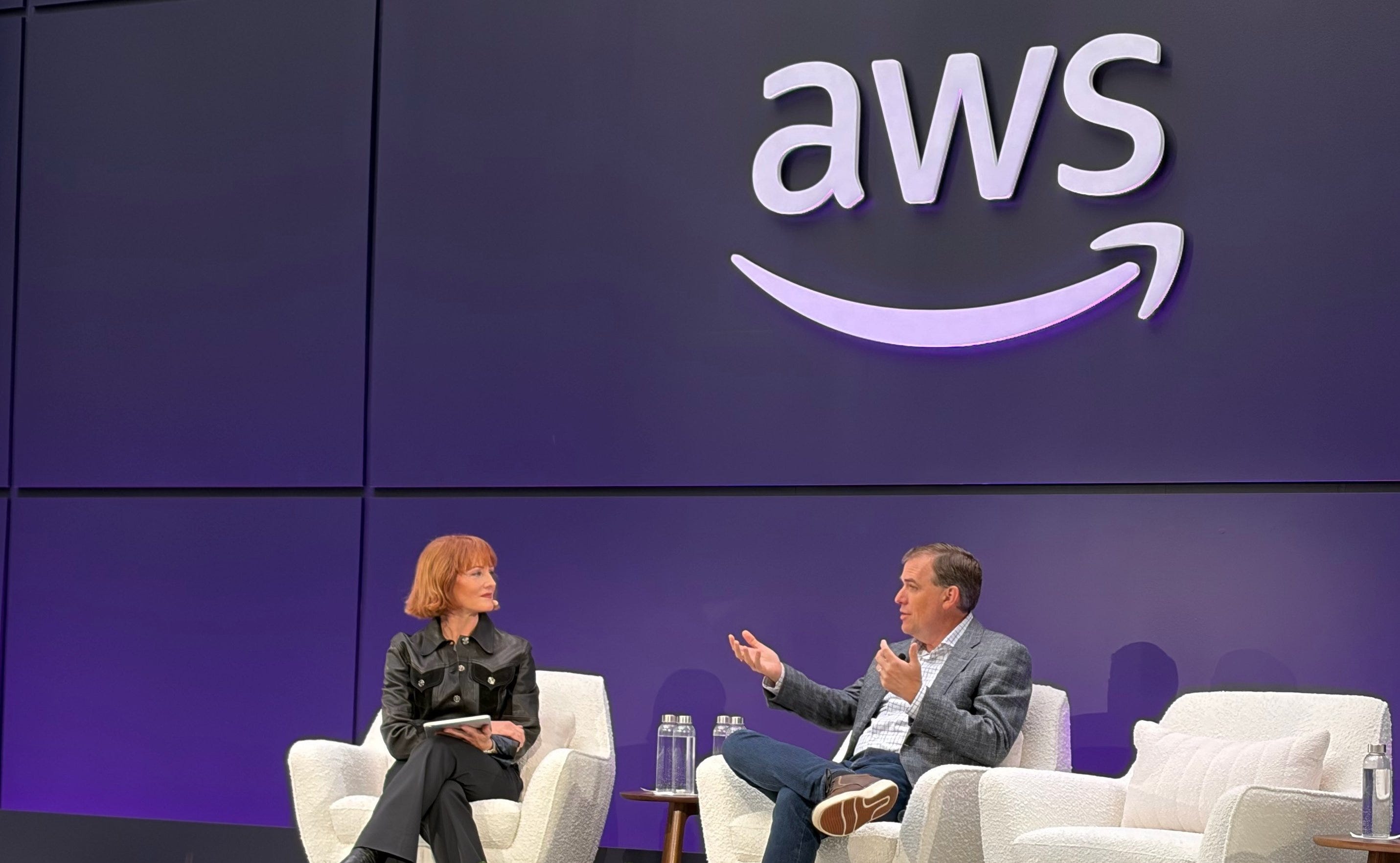
Colleen Aubrey, Senior Vice President of Applied AI Solutions, outlined the AWS approach: it leverages Amazon’s operational expertise, targets enduring business problems its parent could not solve with commercial software, and infuses talent from Amazon to bring that expertise into AWS. Proprietary “secret sauce” built from these in-house solutions is packaged into AI agents that function as teammates.
In addition to Amazon Connect Customer, the renamed CX/CCaaS solution, the portfolio includes three additional offerings.
Amazon Connect Talent is an AI-powered hiring solution built on Amazon’s experience of hiring 250,000 associates each year for peak season. It turns job requirements into structured, skills-based assessments and AI-led voice interviews that candidates can take on their own terms. It applies science-backed scoring and evaluation models to rank candidates and improve matching quality at scale.
Amazon Connect Health builds on Amazon Pharmacy and One Medical. The goal is straightforward: reduce administrative and documentation work from providers, a huge issue in care delivery. It uses agentic capabilities across the patient journey, starting with scheduling and intake to handle appointment booking, insurance checks, and reminders to reduce no-shows. During the visit, it transcribes patient conversations in real time, surfaces clinical context and coding suggestions, and generates draft clinical documentation for provider review. Every recommendation is explainable, with supporting rationale available to clinicians. Post-visit workflows, including follow-ups and medication adherence tracking, are also automated.
Amazon Connect Decisions is the agentic evolution of AWS Supply Chain, addressing supply chain issues for manufactured goods. It features two AI agents, one handling the demand side and the other the supply side, that proactively surface issues and generate options. A third agent assists human decision-making, including the option to incorporate best practices from top-performing planners. The system is powered by proprietary prediction models developed from Amazon’s experience managing hundreds of thousands of SKUs across its retail and logistics footprint.
Discussing his December prediction that we will soon live in a world with over one billion agents, CEO Matt Garman highlighted that agentic AI is starting to enable things that weren’t possible before. Two in particular: the ability to be given a desired outcome and run the end-to-end workflow toward its realization, and the ability to free up time for humans. The Amazon Connect portfolio is aiming at delivering on that vision.
What I find most promising in AWS’s approach is that, unconstrained by any application heritage, it can tackle end-to-end processes without boundaries, exactly the scope agents are built for. It will be fascinating to watch it mature and grow.